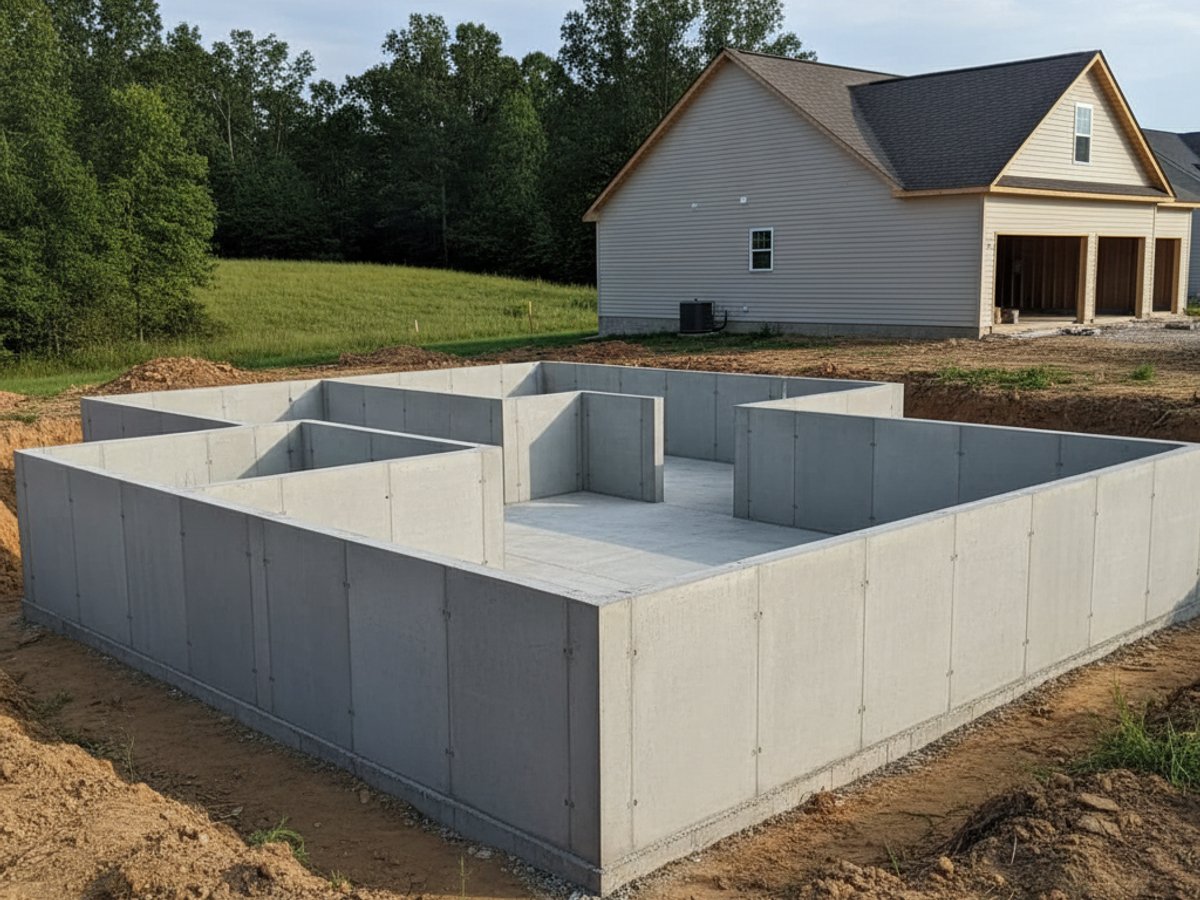
Fresh concrete doesn't care what the calendar says. It cares about temperature, humidity and how fast water leaves the mix. In Raleigh, that mostly comes down to two windows: April through early June, and mid-September through November. Everything outside those windows is workable too, it just takes more effort to keep the pour honest.
Concrete cures through a chemical reaction, not by drying out in the sun. Portland cement and water react to form calcium silicate hydrate, and that reaction needs time and a fairly steady temperature to happen right. Push it too fast or too slow and you get problems that don't show up until months later, usually as cracking, scaling or a surface that dusts off under your shoe.
What summer heat does to a pour
Raleigh summers run hot and thick with humidity, June through September, with afternoon highs regularly in the low 90s and heat index numbers well past that. Concrete placed on a 95-degree day with direct sun on the forms can set up in the finishing crew's hands. The surface loses moisture faster than the mix underneath can supply it, and that's how you get plastic shrinkage cracks, thin surface cracks that show up within the first few hours while the slab is still soft. We deal with it by pouring early in the morning, using a set retarder in the mix, and keeping an evaporation retarder or fog spray going on the surface until finishing is done. It works, but it adds steps and it adds risk. A patio poured at 7 a.m. behaves differently than one poured at 11.
Summer thunderstorms are the other issue. Raleigh gets fast-moving afternoon storms most of the summer, and an unprotected fresh slab hit by a downpour in the first hour can wash out the surface paste, leaving it rough and pitted. We watch radar the morning of a pour, not just the forecast from three days out.
What winter cold does to a pour
Winters here are mild compared to most of the country, but Raleigh still gets 15 to 20 nights a year that drop below freezing, mostly December through February, occasionally into early March. Concrete needs to reach about 500 psi before it can survive a hard freeze without internal damage. Below 50 degrees, the cure slows down a lot, and if fresh concrete freezes before it hits that strength, you get scaling and a weaker slab for good, not something that fixes itself once it warms up. We handle cold pours with insulated blankets over the slab, sometimes hot water in the mix, and we push the schedule so we're not fighting an overnight freeze on day one. It can be done well into winter. It just takes more babysitting than a mild April pour where the concrete is left mostly alone to do its thing.
Clay soil and Raleigh's rain
Raleigh sits in the Piedmont, and the soil under most yards is red clay. Clay holds water and swells when wet, then shrinks and cracks when it dries out, and that movement is what causes a lot of the driveway and patio problems we get called out for years after the original pour. A slab poured over saturated clay that hasn't been allowed to drain and compact properly is going to move, and once it moves it cracks or settles unevenly at the joints.
Spring and fall aren't just easier on the concrete, they're usually easier on the ground too. Late summer and early fall bring the tail end of hurricane season, which for Raleigh usually means heavy rain from tropical remnants rather than direct hurricane winds, most often in September. That rain can leave clay soaked for a week or more. We'd rather excavate and pour on a base that's had a chance to dry and compact than fight standing water in the sub-base. A proper base is usually 4 inches of compacted crushed stone under a driveway slab, and that stone doesn't compact the same in soup as it does in soil with normal moisture.
We also saw-cut control joints within the first 24 to 48 hours after a pour, regardless of season, because the slab is going to crack somewhere and the joints tell it where. In hot weather that window shrinks, since the concrete sets faster. In cold weather it stretches out. Either way, the timing matters more than people expect.
Permits, inspections and how the season factors in
Most concrete work in Raleigh proper goes through the city's permitting process, and in the surrounding towns like Cary, Apex or Wake Forest it's the local town office instead of the county. For driveways and slabs tied to a structure, expect a setback check against your property line and, depending on the job, a footing inspection before concrete goes in the ground. Sidewalks that touch the public right-of-way sometimes need a separate sign-off. None of that changes with the season, but scheduling does. Inspectors get backed up in spring when everyone's trying to build before summer heat, and pours often stack up right before winter too, as people try to finish outdoor projects before the holidays. If you're planning something for early spring, it pays to start the permit conversation in winter rather than waiting for the first warm week.
A lot of Raleigh's older neighborhoods, places like Five Points, Mordecai and Hayes Barton, were built from the 1920s through the 1950s, and driveways or walkways there often sit on soil that's been disturbed and refilled more than once, sometimes with old debris a few feet down. Newer subdivisions out toward Holly Springs or Wake Forest tend to have more consistent, engineered fill, but HOA rules there are usually stricter about what a driveway or patio is allowed to look like, right down to the finish and the color of stamped concrete. Either way, that's a site condition question, not a seasonal one, but it does affect how much prep work happens before the season even matters.
If you need it done now
Sometimes a slab has to happen when it has to happen, a foundation repair before a sale, a walkway before a family visit. Concrete doesn't require perfect weather, it requires the right adjustments for whatever weather shows up. We've poured through August heat and January cold both. What changes is the mix design, the timing of the pour within the day, and how much attention the slab gets in the first 48 to 72 hours after it goes down. That part matters more than what month it is.
If you're not locked into a date, April through May and late September through October give you the least fighting against the weather and the best odds of a clean cure without extra intervention. If you're outside that window, it's still doable, just ask whoever's pouring it what they're doing differently because of the season, and if they don't have an answer, that's worth knowing before you sign anything. You can see the range of driveway, patio, foundation and repair work we handle at Allied Concrete Solutions.